Reliable skip hire, waste removal and recycling services
CallWhatsAppAccount
Household Waste Disposal Guide

Household Waste | 2026-03-21

Household Waste Disposal Guide

A practical guide to household waste disposal in the UK, covering clearances, bulky items, renovation rubbish, recycling and when skip hire makes sense.

By Rocket Skip Hire

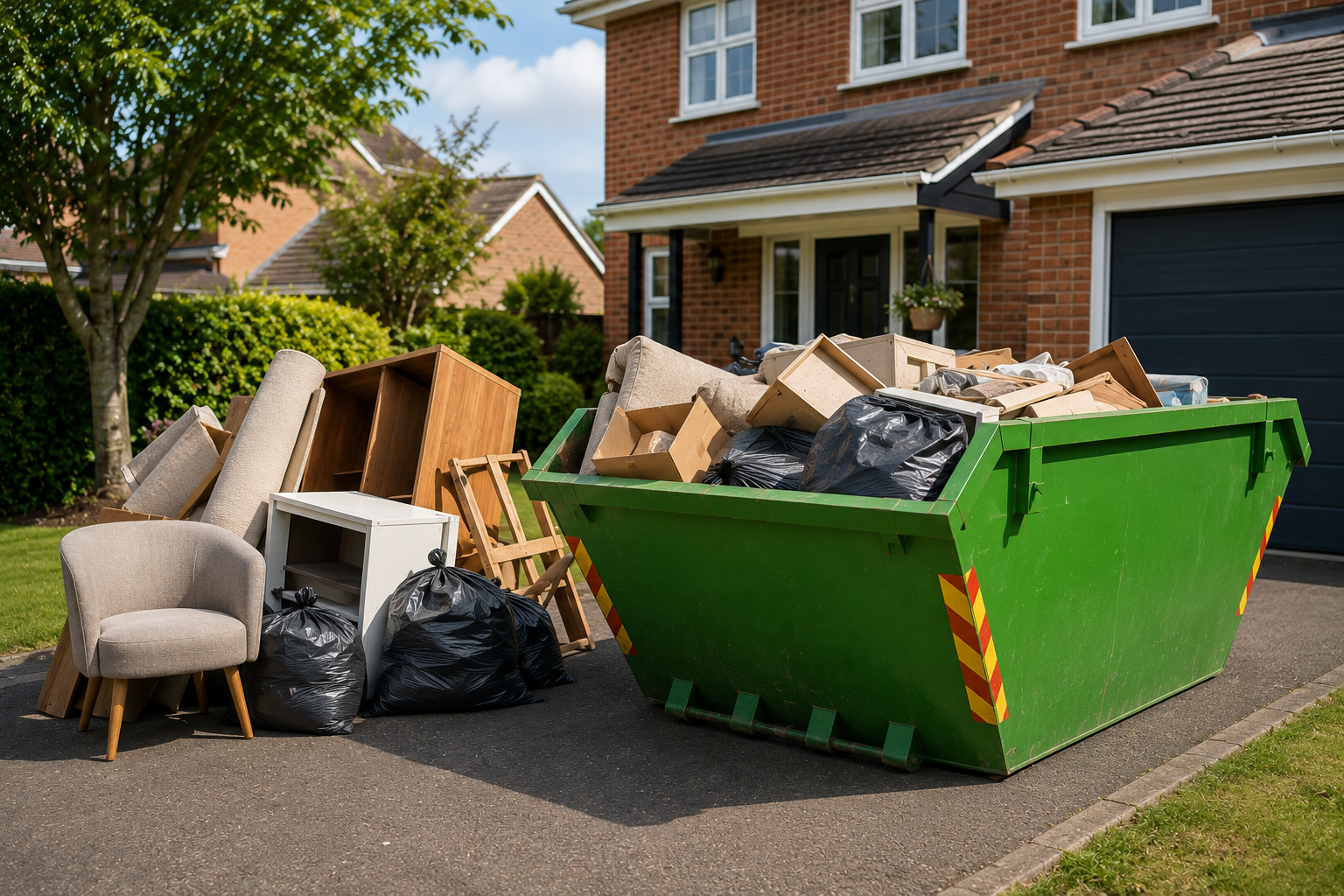
Household waste disposal can become much harder to manage once a clear-out or improvement project grows beyond a few bags of rubbish. Bulky items, old furniture, renovation debris and mixed rubbish can build up quickly, especially when lofts, garages, sheds and storage spaces are fully emptied.

For many households, the most practical place to start is to separate everyday rubbish from bulky items and project waste. That makes it easier to understand what can be recycled, what may need more space and whether a one-off trip solution is realistic or not. Once waste starts to include old fittings, packaging, timber, broken furniture or larger volumes of mixed household debris, the project usually benefits from a more structured removal option.

This is where skip hire often becomes useful. Instead of working around piles of rubbish or making repeated disposal trips, households can keep the waste in one place while the job continues. That is especially helpful for property clearances, decorating work, garden updates and room-by-room improvements.

It also helps to think about timing. Some household jobs create one immediate load, while others build over several days. The right waste solution depends on how the project is unfolding and how much material is likely to appear once cupboards, storage areas and hidden clutter are properly tackled.

A clearer household disposal plan keeps the property easier to work in and makes the project feel more manageable overall. The more realistic you are about the waste volume at the start, the easier the rest of the job usually becomes.

Need help deciding?

If you are unsure, speak to Rocket Skip Hire on 0800 652 0160.
Good to know

Your skip hire guide

What affects the cost of skip hire

The price of a skip depends mainly on its size, the type of waste going into it, where it is being delivered and how long you need it. Heavy materials such as soil, bricks and concrete cost more to process than light mixed rubbish, and a skip on the road needs a council permit that a skip on a driveway usually does not. Giving us accurate details at the start means your quote reflects the job and helps avoid changes later.

What you can put in a skip

Most everyday household and building waste can go in a skip. That includes furniture, carpets, wood, garden cuttings, packaging, plastics, metals, bricks, tiles, rubble and plasterboard, although some materials may need to be kept apart so they can be recycled properly. If you are clearing a mixture of waste, tell us what is in it when you book and we will suggest the most practical way to handle it.

What cannot go in a skip

Some items are not allowed in a standard skip because they are hazardous or need specialist treatment. These include asbestos, paint, solvents, oils, chemicals, batteries, gas cylinders, tyres, fridges, freezers, televisions and other electrical equipment. Mixing these items with general waste can stop a skip from being collected, so please check with us first if you are unsure about anything you plan to throw away.

How to load a skip safely

Place heavy items at the bottom of the skip and spread the weight evenly, then fill the gaps with lighter waste. Break down furniture and flatten boxes so that you make the best use of the space. Keep everything level with the top edge, because an overfilled skip cannot be moved safely or legally. Avoid climbing on the skip while loading, and keep children and pets away from the area.

Getting ready for delivery

Before the skip arrives, choose a flat, firm spot that a delivery lorry can reach easily, and check there are no low branches, overhead cables or parked cars in the way. If the skip is going on a road, the permit needs to be in place first, and the skip may need lights or cones. Let us know about narrow access, gates or soft ground when you book so that we can plan the delivery.

Skip permits explained

If a skip has to sit on a public road or pavement, you will need a permit from the local council before it is delivered. A skip on your own driveway or private land does not usually need one. Fees, time limits and rules on lights and cones vary from one council to another, so tell us where the skip will go when you book and allow a few working days for the permit to be arranged.

How long you can keep a skip

The hire period is agreed when you book, and it can usually be adjusted if your project takes longer than planned. Contact us before the end of your hire if you need more time, and we will confirm what is possible. When the skip is full, or the job is done, just let us know and we will arrange a collection time that works for you.

Where your waste goes

After collection, waste is taken to licensed facilities where it is sorted into materials such as wood, metal, rubble and card. As much as possible is recycled or reused, which reduces the amount sent to landfill. Keeping different types of waste separate where you can, and being clear about what is in the skip, makes that recycling easier.

Skip hire for homes and businesses

Homeowners usually hire a skip for a single project, such as a clear-out, a garden makeover or a refit, while builders and businesses may need regular collections across several jobs. Both are welcome, and trade customers with ongoing waste requirements can apply for a trade account. Whichever you need, our team can talk you through the sizes, timing and options that suit the work.