Reliable skip hire, waste removal and recycling services
CallWhatsAppAccount
How Much Does Skip Hire Cost?

Pricing | 2026-03-23

How Much Does Skip Hire Cost?

A detailed guide to what affects skip hire costs in the UK, including skip size, waste type, permits, hire length and collections.

By Rocket Skip Hire

Skip hire cost is shaped by more than the skip size alone. Capacity matters, but so do waste type, access, hire length, local permit requirements and how the project is expected to run. That is why the cheapest-looking option is not always the most practical one.

A smaller domestic skip will usually cost less than a larger builders skip or a commercial container, but value depends on fit. If the skip is too small for the job, the project can become harder to manage and may need a more disruptive solution later. Booking the right service first time is often the more cost-effective route.

Location and access also make a difference. A skip that can be placed easily on private land is one thing, while a job that needs more planning around access or public-road placement can involve extra considerations. Waste type matters too, because different loads are not always handled in exactly the same way.

Hire length can also affect the quote. Some jobs produce waste quickly and are loaded within a short time, while others run over longer periods and need a solution that stays practical throughout the project. The key is to match the quote to the real needs of the work rather than compare numbers in isolation.

If you want a more accurate idea of cost, the best starting point is to think about the actual project, likely waste mix and how much capacity you really need. That makes it easier to compare quotes on a like-for-like basis and avoid paying for the wrong service.

Need help deciding?

If you are unsure, speak to Rocket Skip Hire on 0800 652 0160.
Good to know

Your skip hire guide

What affects the cost of skip hire

The price of a skip depends mainly on its size, the type of waste going into it, where it is being delivered and how long you need it. Heavy materials such as soil, bricks and concrete cost more to process than light mixed rubbish, and a skip on the road needs a council permit that a skip on a driveway usually does not. Giving us accurate details at the start means your quote reflects the job and helps avoid changes later.

What you can put in a skip

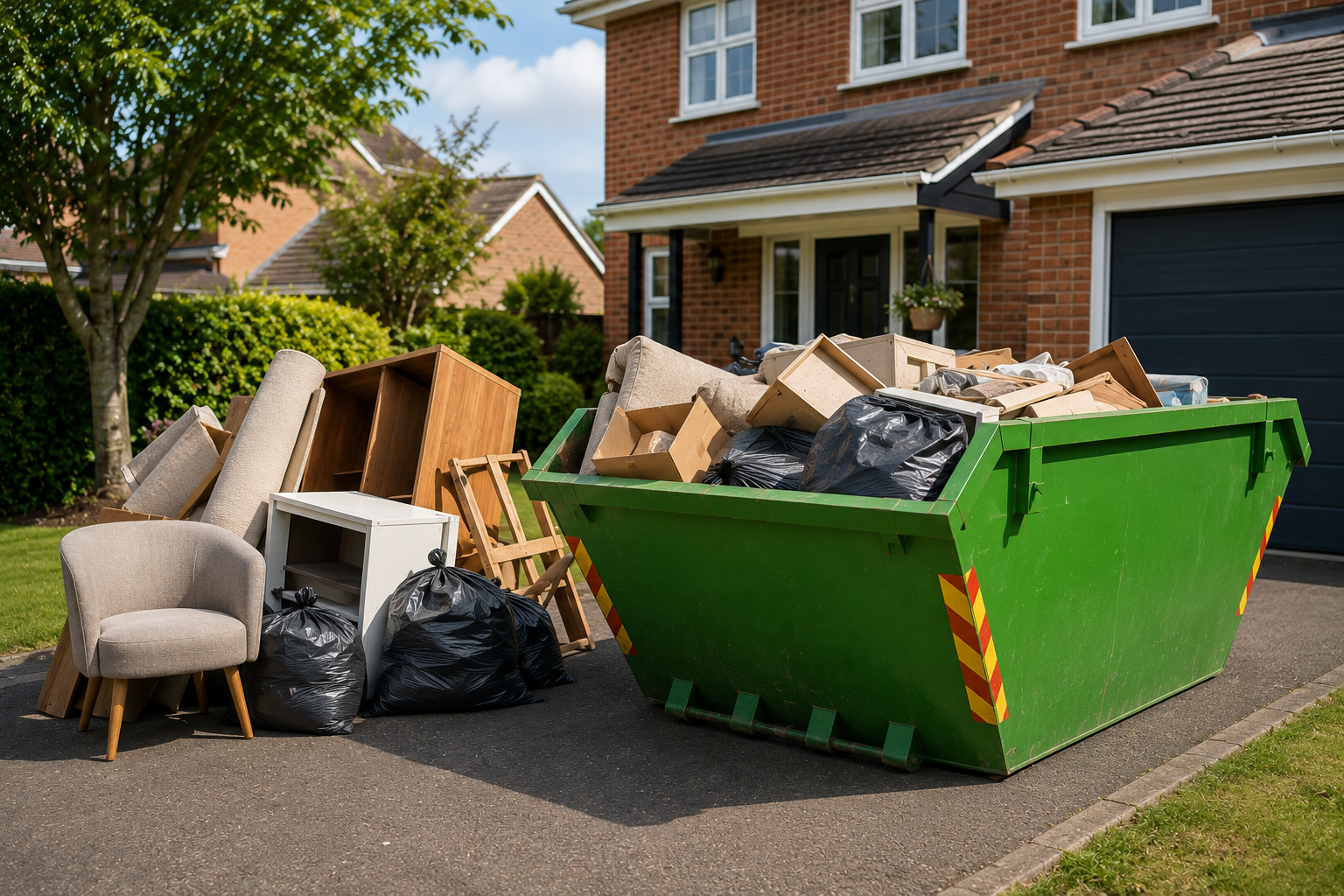
Most everyday household and building waste can go in a skip. That includes furniture, carpets, wood, garden cuttings, packaging, plastics, metals, bricks, tiles, rubble and plasterboard, although some materials may need to be kept apart so they can be recycled properly. If you are clearing a mixture of waste, tell us what is in it when you book and we will suggest the most practical way to handle it.

What cannot go in a skip

Some items are not allowed in a standard skip because they are hazardous or need specialist treatment. These include asbestos, paint, solvents, oils, chemicals, batteries, gas cylinders, tyres, fridges, freezers, televisions and other electrical equipment. Mixing these items with general waste can stop a skip from being collected, so please check with us first if you are unsure about anything you plan to throw away.

How to load a skip safely

Place heavy items at the bottom of the skip and spread the weight evenly, then fill the gaps with lighter waste. Break down furniture and flatten boxes so that you make the best use of the space. Keep everything level with the top edge, because an overfilled skip cannot be moved safely or legally. Avoid climbing on the skip while loading, and keep children and pets away from the area.

Getting ready for delivery

Before the skip arrives, choose a flat, firm spot that a delivery lorry can reach easily, and check there are no low branches, overhead cables or parked cars in the way. If the skip is going on a road, the permit needs to be in place first, and the skip may need lights or cones. Let us know about narrow access, gates or soft ground when you book so that we can plan the delivery.

Skip permits explained

If a skip has to sit on a public road or pavement, you will need a permit from the local council before it is delivered. A skip on your own driveway or private land does not usually need one. Fees, time limits and rules on lights and cones vary from one council to another, so tell us where the skip will go when you book and allow a few working days for the permit to be arranged.

How long you can keep a skip

The hire period is agreed when you book, and it can usually be adjusted if your project takes longer than planned. Contact us before the end of your hire if you need more time, and we will confirm what is possible. When the skip is full, or the job is done, just let us know and we will arrange a collection time that works for you.

Where your waste goes

After collection, waste is taken to licensed facilities where it is sorted into materials such as wood, metal, rubble and card. As much as possible is recycled or reused, which reduces the amount sent to landfill. Keeping different types of waste separate where you can, and being clear about what is in the skip, makes that recycling easier.

Skip hire for homes and businesses

Homeowners usually hire a skip for a single project, such as a clear-out, a garden makeover or a refit, while builders and businesses may need regular collections across several jobs. Both are welcome, and trade customers with ongoing waste requirements can apply for a trade account. Whichever you need, our team can talk you through the sizes, timing and options that suit the work.