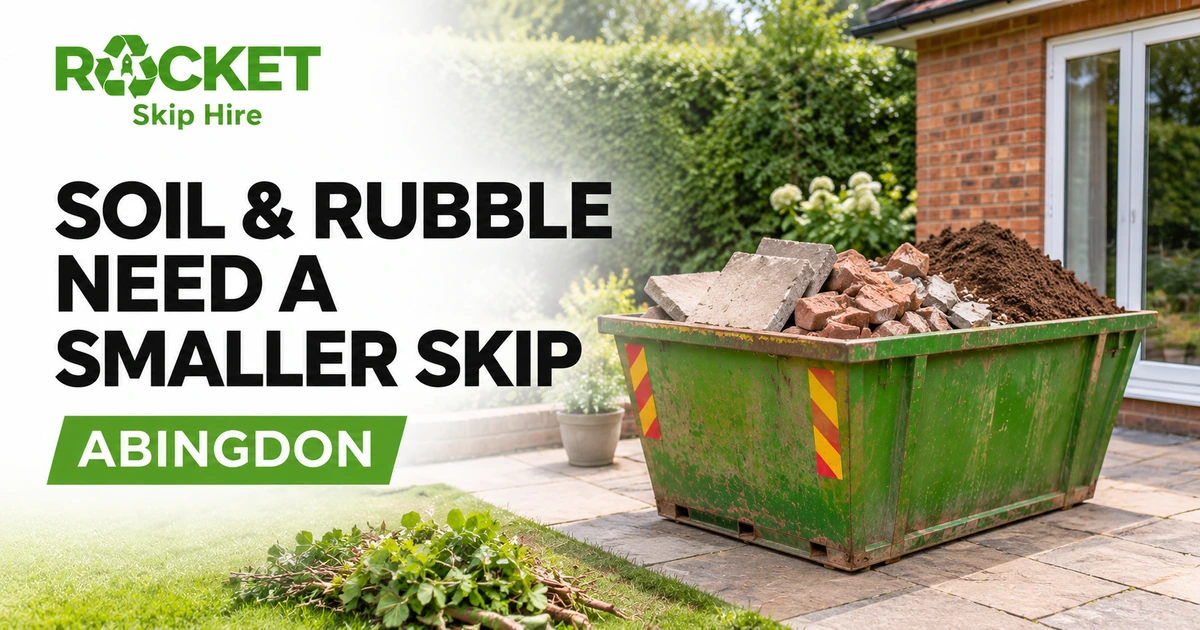
By Rocket Skip Hire
Soil, Rubble and Turf in Abingdon Gardens: Why the Heavy Stuff Needs Its Own Smaller Skip
An inert skip is for clean mineral material only: soil, clay, stone, sand, gravel, bricks, concrete, tiles and ceramics, with no wood, plastic, plants or general rubbish mixed in. Because that material weighs roughly 1.15 tonnes per cubic yard by the conversion factor HM Revenue and Customs publishes for landfill tax, the inert waste skip Abingdon customers order for a garden dig out is usually a 2, 4 or 6 yard skip rather than the big builders size.
We cover the difference between inert and mixed skips, the weight problem in plain numbers, which size suits a typical patio or border job, where green waste should go instead, and the mistakes that push a landscaping budget over.
Measuring up a patio this weekend? Pick a skip size and book delivery on our services page, and tell us the load is soil or rubble so we send the right skip.
Inert or Mixed: Sorting the Pile Before You Book
Inert is a word from waste regulation and simply means material that does not break down, burn or react once it is in the ground. HM Revenue and Customs puts naturally occurring rock, clay, sand, gravel and subsoil in one group and concrete, bricks, tiles and ceramics in another, and both qualify for the lower rate of landfill tax when they arrive clean. Put a few bags of hedge trimmings or a broken fence panel on top and the whole load is treated as mixed waste at the standard rate, and that difference lands in the disposal cost.
Material from a typical Abingdon garden job | Inert skip | Mixed skip | Worth knowing |
Topsoil, subsoil, clay | Yes | Yes, but wasteful | Heaviest common load; reaches the weight limit long before the rim |
Old patio slabs, concrete bedding, bricks | Yes | Yes | Break slabs so they stack flat |
Turf | Usually no | Yes | Grass and soil together count as mixed; ask before loading |
Hedge cuttings, shrubs, roots | No | Yes, or a green waste skip | Compostable, so a mixed or green skip is the right home |
Fence panels, decking, sheds | No | Yes | Treated timber is never inert |
Plasterboard, paint tins, gas bottles | No | No, tell us first | Handled separately, never in a general or inert skip |
Why an Inert Waste Skip Abingdon Gardens Fill Weighs So Much
Here is the arithmetic that decides the size. The HMRC landfill tax notice gives conversion factors for estimating weight: inactive or inert waste at 1.15 tonnes per cubic yard, against 0.15 tonnes per cubic yard for loose household waste. An 8 yard skip of general rubbish therefore weighs in the region of a tonne, while the same skip brimming with wet clay from an Abingdon back garden would be heading towards nine tonnes. A skip lorry has a legal payload like any other vehicle and the lifting arm has a rated limit too, which is why yards steer heavy loads into smaller skips. Our own size guide says plainly that soil and rubble fill a skip by weight well before it is full.
Skip size | Loose household waste (0.15 t per yard) | Inert soil or rubble (1.15 t per yard) |
2 yard | about 0.3 tonnes | about 2.3 tonnes |
4 yard | about 0.6 tonnes | about 4.6 tonnes |
6 yard | about 0.9 tonnes | about 6.9 tonnes |
8 yard | about 1.2 tonnes | about 9.2 tonnes |
These are estimates from the HMRC factors, not weighbridge readings, and wet material is heavier again, but they show why nobody sensible offers an 8 yard skip for pure soil.
Picking the Size for Soil and Rubble
1. Work out the volume. Length by width by depth of the dig in metres gives cubic metres; multiply by 1.3 for cubic yards, and remember dug soil bulks up by a quarter or more once loose.
2. Match it to a small skip. A 2 yard skip suits a couple of raised beds or a short path, a 4 yard skip handles a modest patio base, and a 6 yard skip is the usual ceiling we suggest for heavy material.
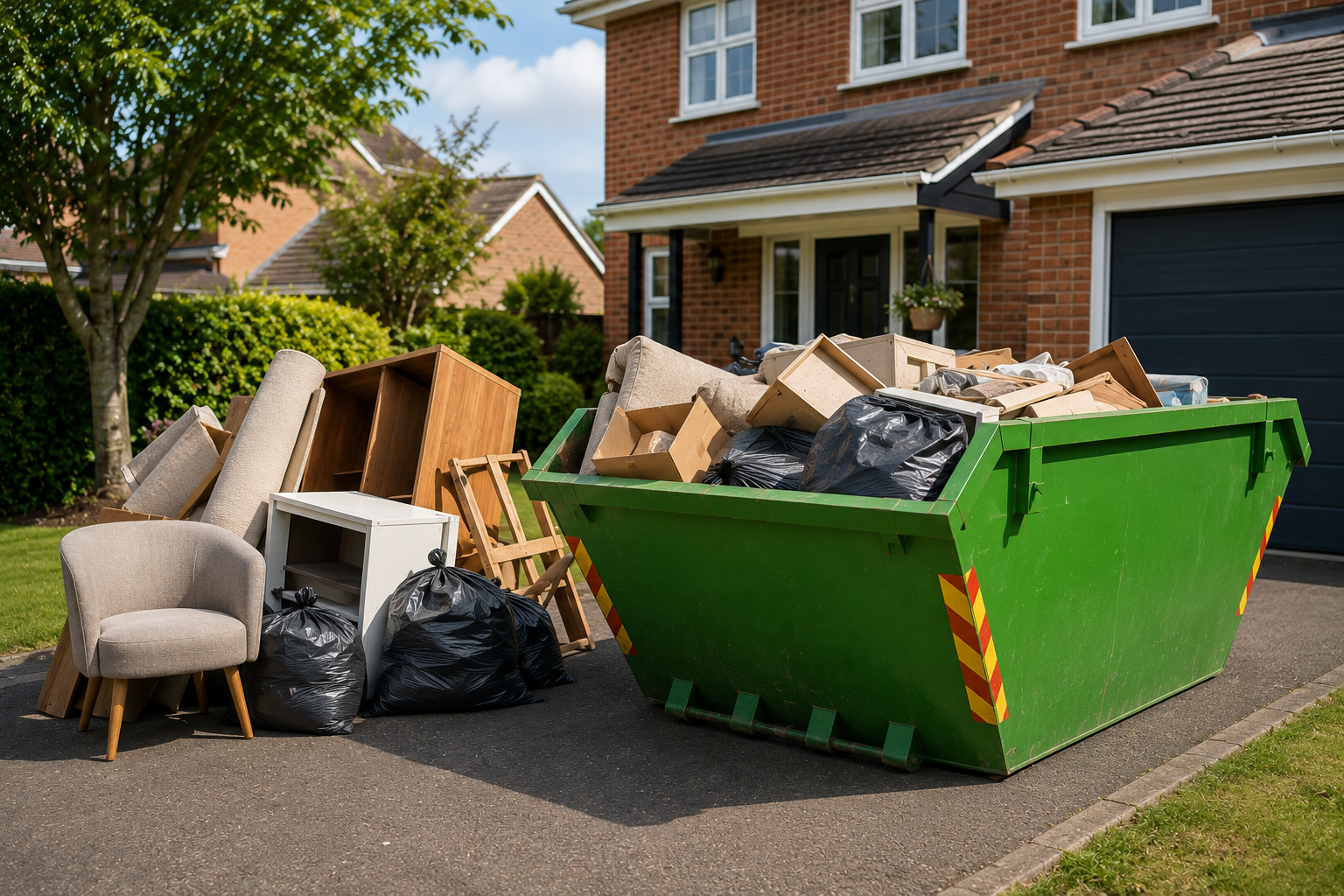
3. Keep rubble and soil in the inert skip and everything else, turf and roots included, in a second mixed skip if the job has both.
4. Load level to the rim and no higher. Heavy material above the rim cannot be netted safely and the driver can refuse the lift.
5. Tell us what is going in when you book, so the skip you receive is the right one for the weight.
If the job is bigger than a garden, say a garage base coming up or a boundary wall coming down, the builders skip hire Abingdon trade customers book for mixed demolition waste is a different animal, and we will talk through whether you need one skip or two.
Not sure if your load is inert or mixed? Describe it in the notes when you book on the Rocket Skip Hire services page and we will advise before delivery.
Green Waste Is a Separate Conversation
Hedge trimmings, prunings, roots and grass are not inert and should never share a skip with clean rubble, but they are easy to deal with on their own. Vale of White Horse District Council runs a paid garden waste bin service that moved to an annual permit sticker from April 2025, with each payment year running from 1 April to 31 March, which suits a steady trickle of cuttings. For a one off clearance of an overgrown plot the garden waste skip hire Abingdon households book is quicker, and because green waste is light you can go up a size without worrying about the lorry. Do the green clearance first, then dig; a layer of brambles in a rubble skip turns a lower rate load into a standard rate one.
A Tipper Load That Ended in Court
Inert waste gets fly tipped too, and the Vale has prosecuted for it. In a case the district council reported in December 2020, a tipper truck was filmed on CCTV dumping hardcore and soil on private land off Grove Road in Harwell, at a spot the council had already fitted with cameras after earlier incidents. A man from Fyfield Wick, just outside Abingdon, pleaded guilty at Oxford Magistrates Court to the unlawful deposit of waste from a vehicle, received a twelve month conditional discharge and was ordered to pay £1,006 in prosecution costs plus a £21 surcharge. Clean rubble is cheap to dispose of lawfully; it is the hauling that tempts people to cut corners, and the cameras in the Vale are watching for exactly that.
Where Patio Jobs Go Over Budget
• Ordering an 8 yard skip for soil because it looks like a lot of soil, then being told it can only be filled to a line.
• Throwing turf, roots and the old rotary washing line in with the rubble and losing the inert rate.
• Underestimating bulking; a trench that measures one cubic metre in the ground is often a third more once dug.
• Loading above the rim so the driver cannot net the skip and has to come back after you level it.
• Paying a man with a tipper cash to take soil away without asking for a waste carrier registration number or a transfer note.
Loading Tricks for Heavy Material
• Lay broken slabs flat along the bottom; they pack tighter than slabs stood on edge.
• Keep a tarpaulin over soil between sessions so rain does not add weight you then pay for.
• Shovel soil into the corners first and leave the middle for the last barrow loads.
• Put a sheet of ply or an old door under the skip feet if the drive surface is soft or newly laid.
• Set the skip where the barrow run is shortest, which on most Abingdon drives means tight to the side gate.
A Word From the Weighbridge
Every skip that comes back to a yard crosses a weighbridge, and the ticket tells the story of the job. Clean inert loads are the cheapest tonnes in the yard because they go for crushing and reuse or to a lower rate tip, and the landfill tax rates explain the gap: the standard rate for 2026 to 2027 is £130.75 per tonne, while the lower rate for inert material is £8.65 per tonne, up from £4.05 the year before. One contaminated nine tonne load can cost more in tax alone than the hire. Rocket Skip Hire delivers inert and mixed skips across Abingdon from 2 to 16 yards, plus roll on roll off containers for the biggest clearances, and every firm you compare for construction waste removal Abingdon projects should be able to show a waste carrier registration number before a wheel turns.
A second builders skip hire Abingdon tip from the yard: ask the trades to keep a separate inert pile from the first day, not from the day the skip arrives. Sorting rubble out of a mixed heap later is slow, dirty work that nobody prices for.
Getting the Soil Out Cleanly
The rule of thumb for an inert waste skip Abingdon patio or landscaping job is small skip, clean load, level fill. Work out the volume, allow for bulking, keep the greenery in its own garden waste skip hire Abingdon container or the brown bin, and let the weighbridge reward you with the lower rate. If the skip will sit on your drive for a while, it is also worth reading how to stop neighbours and passers by using it, because a half empty rubble skip is an open invitation.
Ready to dig? Book an inert skip for the rubble and a mixed or green skip for the rest on the services page, and we will deliver them together.
If you are unsure, speak to Rocket Skip Hire on 0800 652 0160.